



If you Google “biggest problem businesses are facing today,” you’ll see articles about inflation, new technology, or supply chain issues. Yes, these things matter. But they’re not the real problem.
I speak from experience. I’ve failed in business twice—once in 2015, then again in 2019. Each time, I thought the market was to blame. But in 2023, when my partner and I started over from scratch, we rebuilt a small resort with nothing but a tent, a bicycle, and a plot of dirt.
Through this journey, I learned something important: the biggest challenge for small business owners today isn’t money or market conditions. It is what I call the “Resilience Gap.“
We live in a world of instant success stories on social media. We see the glamorous results—the fully booked hotels, the viral products, the “seven-figure” launches—but we never see the messy middle. When real problems hit—rain delays, no customers, or bills piling up—many entrepreneurs quit. Why? Because they’ve forgotten how to do hard, hands-on work.
This article shares the truth about why small businesses fail and how business resilience and grit can help you survive.
1. Waiting for Perfect Conditions (The Perfectionism Trap)
The most dangerous thought a business owner can have is: “I’ll work hard once everything is ready.”
When we started Dream Garden, I didn’t have an office. I didn’t have a comfortable chair. I worked outside with my laptop sitting on the ground next to a rusty orange wheelbarrow.
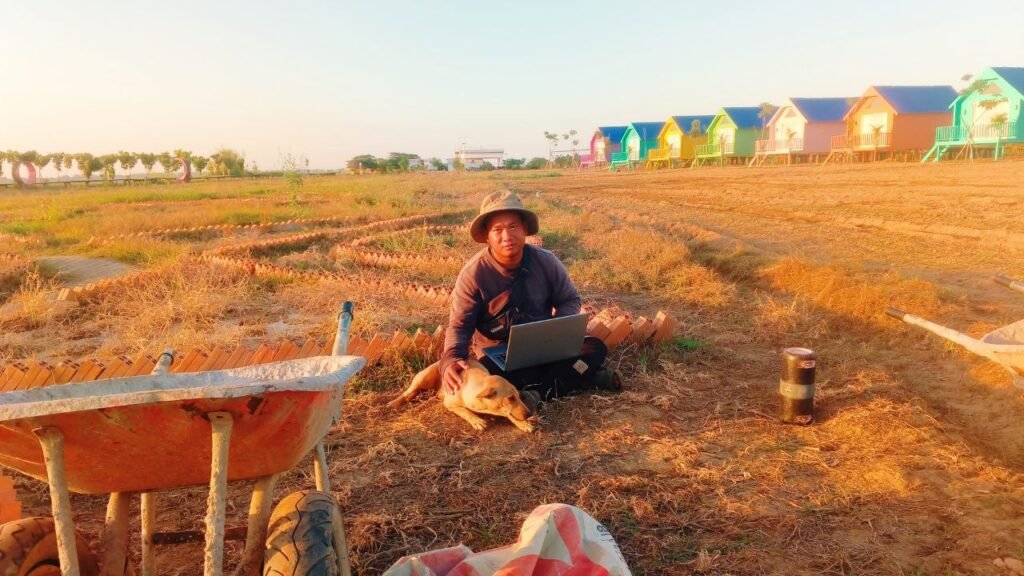
Looking back at photos from that time, the contrast is almost funny. I remember sitting there in the dirt, typing away on my laptop with my dog, Dudo, guarding me. To my right sat that old wheelbarrow, caked in dried cement. In front of me was a construction site. But behind me, you could see the rows of colorful houses—blue, yellow, and pink—standing bright against the sky.
I didn’t have a desk, but I had a vision. If I had waited until I could afford an office chair to answer emails or manage bookings, those houses would never have been built.
Here’s the problem: Many businesses spend all their money trying to look professional before they make any profit. They buy expensive furniture, rent fancy offices, and design perfect websites. Then the money runs out before they have acquired a single customer.
The solution: Get comfortable being uncomfortable. If you wait for air conditioning and a nice desk before doing your best work, you’ll fail. The ability to work in messy, imperfect conditions is your secret advantage. This is business resilience in action.
2. Losing Touch with Your Beginning (The Ego Problem)
As your business grows, things get complicated. You hire people, manage budgets, and worry about numbers. It’s easy to feel stressed and forget why you even started.
I keep a photo from my early days to remind myself. Before we had our famous “Heart Gate” entrance or those colorful A-frame houses, I slept in a tent on a wooden platform. I rode a bicycle everywhere because I couldn’t afford a car.

My “bedroom” was a simple beige camping tent pitched on a wooden deck we built ourselves. At night, it was just me, the tent, and my bicycle parked within arm’s reach. There were no walls to block the noise of the wind or the insects. It wasn’t comfortable, and it definitely wasn’t glamorous.
But waking up in that tent every morning gave me a hunger that you simply cannot get when you sleep in a comfortable bed. That bicycle was my only transport, and that tent was my only shelter. It taught me that you don’t need luxury to build a legacy.
Here’s the problem: When you forget your difficult early days, you start making decisions based on pride instead of common sense. You want to impress people. You avoid “cheap” solutions because they hurt your ego. You stop getting your hands dirty.
The solution: Remember where you came from. If you survived sleeping in a tent and riding a bicycle to work, you can definitely survive today’s problems. This mindset is key to overcoming business challenges.
3. Thinking You Need Big Money to Compete
One of the biggest lies small businesses tell themselves is that they can’t compete with big companies because they don’t have enough money.
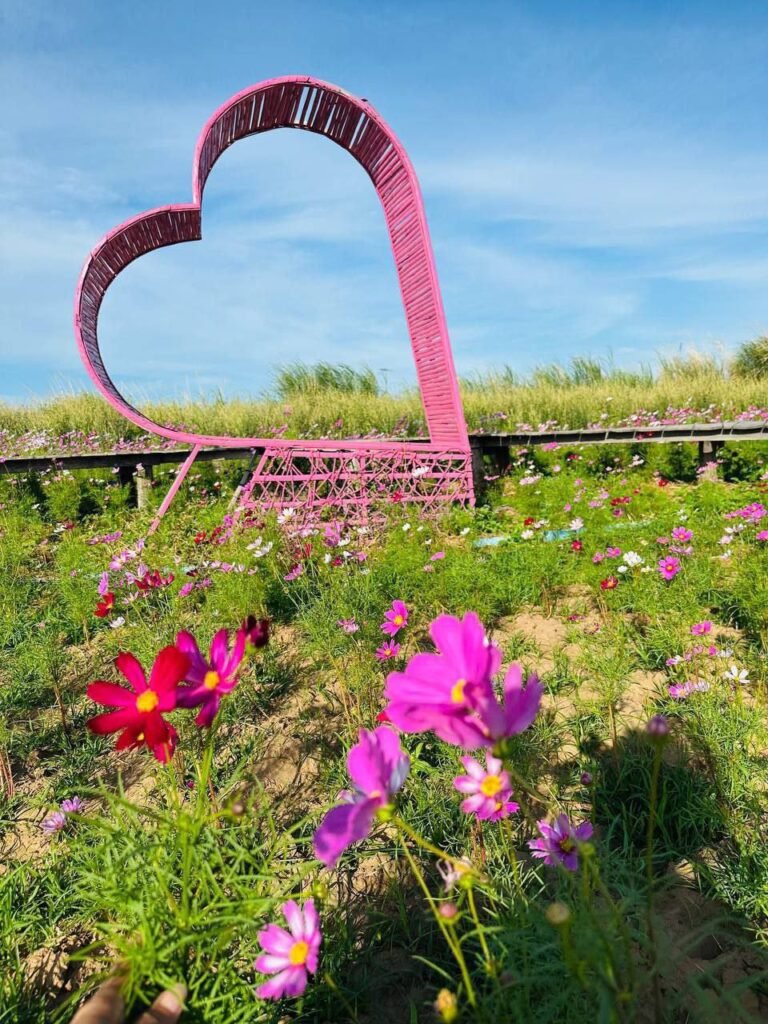
We proved this wrong with our Heart Gate project. We needed something eye-catching to attract visitors—something “Instagrammable” that would put us on the map. A professional design company would have charged $50,000 or more for a landmark structure. We didn’t have that kind of cash.
Instead, we bought simple steel tubes for $4.50 each and metal sheets for $50. We designed it ourselves and spray-painted it with $5 cans of paint.
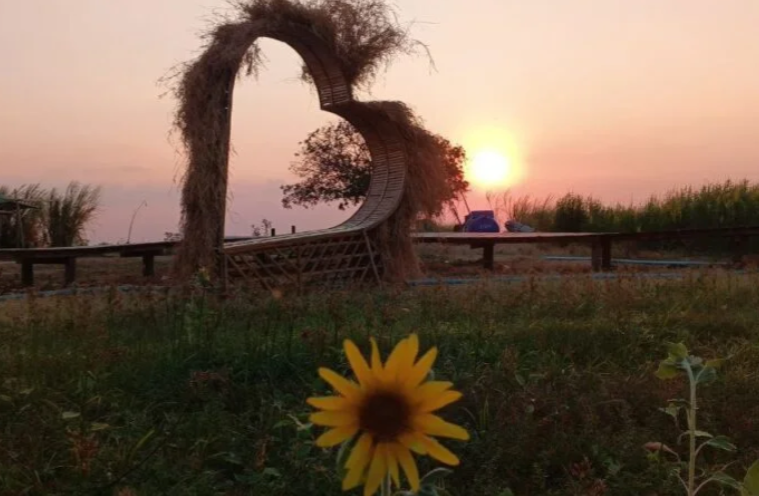
When we finished the Heart Gate, it wasn’t just a piece of metal; it became a frame for the sunset. We placed it perfectly so that as the sun went down, the golden light would beam directly through the center. We used local straw and simple materials to soften the look, making it feel like part of nature rather than a cold industrial structure.
Visitors didn’t care that the materials cost less than $500. They cared about how it made them feel. They lined up to take photos not because it was expensive, but because it was magical.
We applied this same logic to everything we built. Whether it was the pink bamboo circles on our walkways or the layout of our flower gardens, we used sweat equity instead of writing checks.
Here’s the problem: People think money solves everything. When you don’t have a big budget, you give up instead of getting creative.
The solution: Creativity beats cash every time. We built a 5-meter-tall photo landmark that brings visitors to our resort every single day. Big results don’t always need big budgets—they need smart thinking and hard work.
4. The Silent Killer: Loneliness and Burnout
Finally, let me talk about something nobody mentions enough: mental health challenges for entrepreneurs. The pressure of running a business is heavy. You make all the decisions. You carry all the worries. It’s lonely at the top.
I remember standing on a concrete path during the early construction phase, looking at the endless work ahead of me. The grass was dead, the money was tight, and I felt very small. That’s when my dog, Dudo, would come running to greet me.

That simple moment of connection helped me remember I wasn’t completely alone. Sometimes, resilience isn’t about powering through; it’s about pausing to pet your dog and take a breath.
Here’s the problem: Business owners isolate themselves. They think they need to be strong and hide their stress from their team. This leads to serious burnout.
The solution: Build a support system. Find a co-founder, mentor, friend, or even a pet. You cannot carry the weight of a business completely alone. Asking for help isn’t weakness—it’s smart leadership.
5. How to Build Your “Resilience Muscle”
So, how do you actually close the Resilience Gap? You don’t do it by reading books. You do it by practicing discomfort. Here are three ways to start:
- The “Downgrade” Challenge: For one week, remove one comfort from your work life. Don’t use your ergonomic chair. Turn off the AC for two hours a day. Remind yourself that you can function without perfect conditions.
- DIY Before You Buy: Next time you need something for your business, ask: “Can I build this myself?” Even if you can afford to buy it, the act of building it (like our Heart Gate) trains your brain to be resourceful.
- Visual Anchors: Put a picture of your “starting point” on your desk. For me, it’s the picture of the tent. When a client cancels or a deal falls through, I look at that tent and think, I survived that, I can handle this.
Final Thoughts: The View is Worth the Climb
If you’re struggling with your business right now, remember this: every successful business you admire started with problems. The difference between businesses that survive and businesses that fail isn’t money or luck. It’s resilience.

Can you work with a laptop on the ground next to a wheelbarrow? Can you ride a bicycle when you can’t afford a car? Can you build something with your own hands to save money?
If you can overcome your own mindset, stay humble, and keep moving forward, then no external problem can stop you.
The biggest challenge for small business owners today isn’t out there in the market. It’s inside your own head. Once you fix that, everything else becomes manageable.
What challenges are you facing in your business right now? Share in the comments below.
