



I’m sitting outside Dream Garden right now, my dog Dudo asleep at my feet. My hands are dirty from replanting some flowers, and I just finished fixing a broken fence. It’s a quiet Tuesday afternoon on Koh Chraeng Island, and I’m thinking about how far I’ve come.
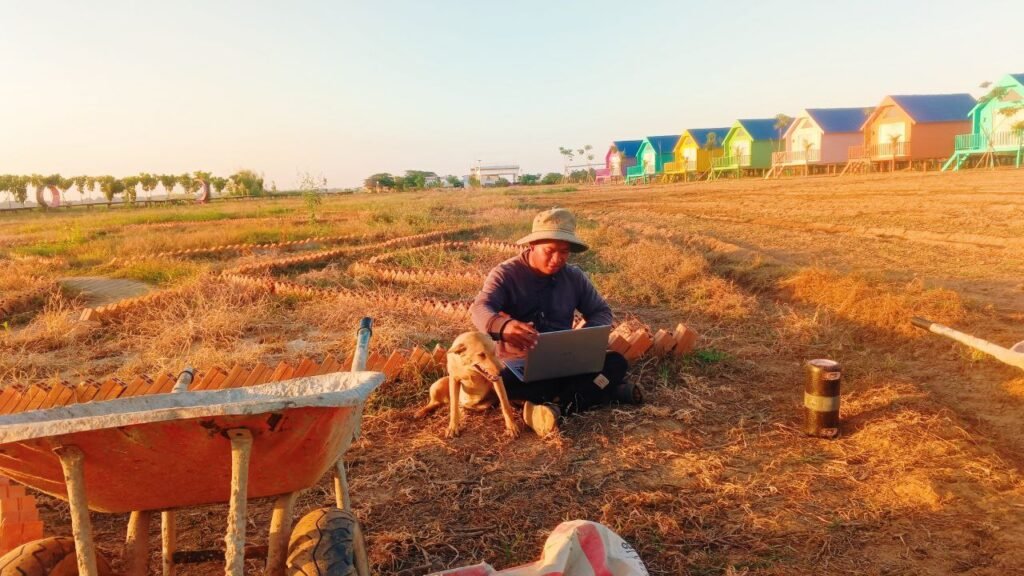
Fifteen years ago, I was just a garden worker. I had no business degree, no fancy connections, and honestly? I had no idea what I was doing half the time. But today, I co-own this place—a riverside garden that people actually come to visit.
If you’re reading this because you want to know how to start a landscaping business with no experience, I won’t give you some polished success story. I’ll tell you the real one. The one with failures, doubts, and a lot of trial and error.
Why I’m Writing This (And Why You Should Keep Reading)
Look, there are tons of articles about how to start a landscaping business. Most of them are written by people who’ve never actually gotten their hands dirty. They’ll give you business plans and marketing strategies, which sure, those matter eventually.
But what about the stuff nobody talks about? Like how to prepare yourself mentally before jumping in. Or what skills to learn before starting a business when you’re starting from zero. That’s what this is about.
This isn’t a textbook. It’s a conversation between someone who’s been there and someone (you) who’s about to start.
My Background (Spoiler: I Wasn’t Special)
2008: Just Another Garden Worker
When I started in 2008, I was nobody special. Seriously. I watered plants, pulled weeds, carried heavy bags of soil. My boss would tell me what to do, and I’d do it. That was the job.
The pay wasn’t great. The work was physically exhausting. But something weird happened after about a year—I started actually paying attention.
I’d watch my boss design these small garden decorations, and something clicked in my brain. It looked… fun? Creative? I don’t know, I just knew I wanted to try it.
So one day I asked him, “Hey, can I try making some of those decorations instead of just watering plants all day?”
He shrugged and said yes.
That’s when everything changed for me.
The Bamboo Heart That Changed Everything
Here’s a story that probably sounds stupid, but it meant everything to me.
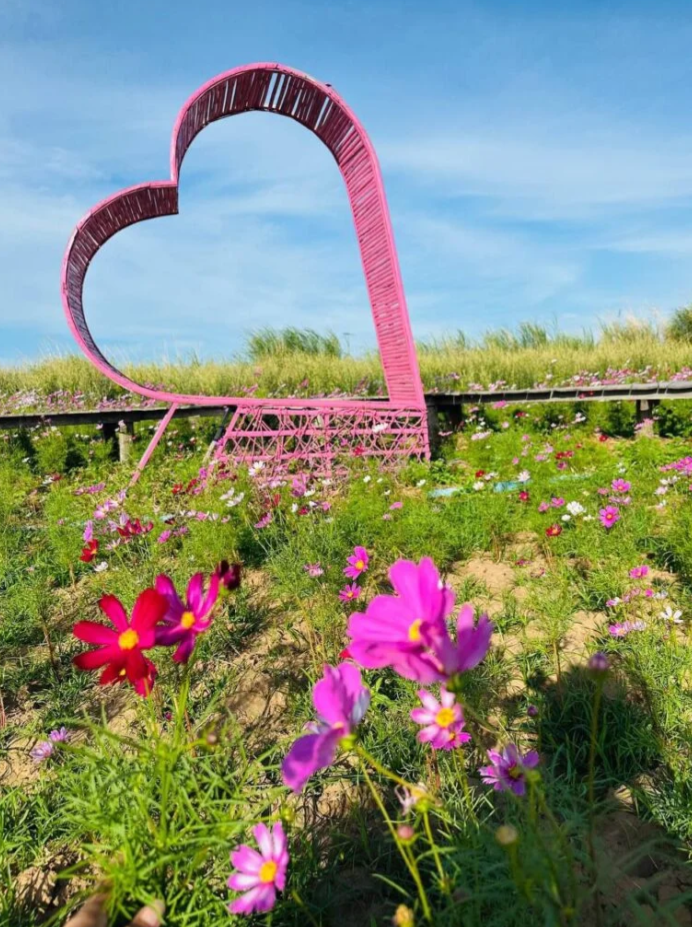
I decided to make a heart shape out of bamboo. But I didn’t want a small wall decoration—I wanted something massive that people could take photos with. A landmark.
First attempt: the bamboo split wrong. Trash.
Second attempt: the shape looked weird and lopsided. Trash.
Third attempt: it fell apart before I even finished. Trash.
Fourth attempt: same thing.
I was sweating, frustrated, my hands hurt. Part of me wanted to quit and just say, “Forget it, I’m not creative enough for this.”
But I tried a fifth time.
And that fifth time? It worked. The bamboo bent perfectly. The heart shape looked beautiful. I stood there staring at it, feeling ridiculously proud of myself.
That moment taught me something important: if you actually love what you’re doing, you won’t give up on try number three. You’ll go for try number five.
How to Prepare Yourself Before Starting a Business (The Real Talk)
Okay, let’s get into the actual preparation stuff. This is the part most people skip, and then they wonder why their business fails in six months.
Figure Out What You Actually Want to Do
I know, I know. This sounds obvious. But hear me out.
A lot of people think, “I want to start a landscaping business” because they saw someone on Instagram making it look easy. Or because their neighbor makes good money doing it.
That’s not a good enough reason.
You need to ask yourself some uncomfortable questions:
- Do I actually enjoy working outside in all weather?
- Am I okay getting physically dirty every single day?
- Do I like plants, or do I just like the idea of working with plants?
- Can I handle the repetitive parts of this work?
For me, the answer was yes to all of those. I genuinely loved being outside. I liked seeing plants grow because of something I did. Even the boring parts—weeding, watering, digging—didn’t bother me that much.
If you’re not sure yet, that’s fine. Work in the field first. Get a job at a landscaping company, even if it’s just part-time. See if you still like it after three months of actual work.
Build Your Skills Before You Build Your Business
This is huge. You can’t start a landscaping business with beginner-level skills and expect professional results.
From 2008 to 2014 (that’s six years!), I was learning everything I could. I wasn’t planning to start a business the whole time—I was just trying to get better at what I loved.
Here’s what I learned during those years:
- How to design small gardens that actually look good
- Which plants grow well in different conditions
- How to build simple structures like garden paths and borders
- Basic carpentry for decorative pieces
- What customers actually want (by listening to my boss’s clients)
Important point: I didn’t learn all this from books or YouTube. I learned by doing it wrong first, then figuring out how to do it right.
That bamboo heart? I made dozens of them after that first successful one. Each one got a little better.
Work Hard at Your Current Job (Yes, Really)
I know you want to quit your job and start your business tomorrow. I felt the same way.
But here’s what I did instead: I became the best garden worker I could be while I was still employed.
Why? Three reasons:
First, every job teaches you something useful. Even the boring parts. When I was watering plants every day, I learned which ones needed more water, which ones were drought-resistant, what time of day was best for watering. That knowledge helped me later.
Second, you’re building a reputation. My boss knew I was reliable and hardworking. When I eventually started my own business, he actually sent some clients my way because he trusted me.
Third, you’re earning money to save. Starting a business costs money. Having a financial cushion makes everything less stressful.
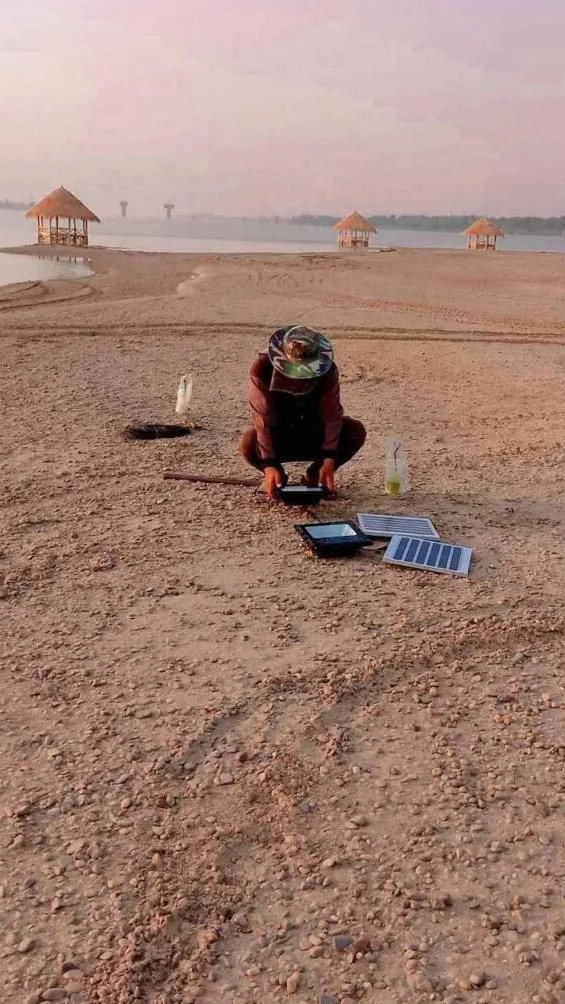
I remember one day at Dream Garden, our solar panel broke during the hottest part of the day. I climbed up to fix it myself, sweating like crazy. One of my workers said, “Boss, let me do that. It’s too hot.”
I told him I needed to check it myself to see if we could still use it or if we needed to buy a new one.
The point? I learned to do hard things by doing hard things at my regular job first.
Create Your Own Style (Don’t Just Copy)
This is where a lot of new businesses fail. They look at successful landscaping companies and think, “I’ll just do exactly what they do.”
Bad idea.
Yes, you should study other businesses. See what works. Learn from them. But then you need to add your own twist.
At Dream Garden, our style is different from other gardens around here. We focus on small, cozy spaces with natural decorations. Everything has this handmade feel because, well, I made most of it by hand.
Some other gardens nearby are more modern and sleek. That’s fine. That’s their style. But it’s not mine.
Your style comes from:
- What you personally find beautiful
- What you’re naturally good at
- What your area needs but doesn’t have yet
Don’t stress about finding your style on day one. It develops over time as you work.
The Landscaping Business Checklist Nobody Talks About
Forget fancy business plans for a minute. Here’s the real checklist for how to prepare yourself before starting a business:
Mental Preparation Checklist
- Accept that you’ll fail at some things – I started businesses in 2014 and 2017 that didn’t work out. That’s just part of the process.
- Be ready for people to doubt you – Some friends thought I was crazy to leave stable employment. You’ll hear things like “Why don’t you just keep your regular job?” or “Landscaping? Really?”
- Prepare for money stress – The first year is tight. Like, really tight. You might need to live pretty simply for a while.
- Know that you’ll work harder than ever – Being your own boss doesn’t mean less work. It usually means more work, especially at first.
- Get comfortable with uncertainty – No steady paycheck. No guaranteed clients. You’ll need to be okay with this.
Skills Checklist
- Basic landscaping knowledge – Obviously. But make sure it’s real knowledge from practice, not just theory.
- Simple design skills – You don’t need to be an artist, but you should be able to sketch out ideas for clients.
- Basic business math – Pricing, profit margins, expenses. You need to understand these without a calculator.
- Customer service – How to talk to clients, handle complaints, explain your ideas clearly.
- Problem-solving – Things will go wrong. Equipment breaks. Weather ruins your schedule. Plants die. You need to figure it out.
- Time management – You’ll be juggling multiple projects, clients, and tasks. Learn to prioritize.
Financial Checklist
- 6 months of personal expenses saved – Minimum. This is your safety net.
- Startup capital – For basic equipment, initial supplies, maybe some advertising.
- Emergency fund – Separate from your startup money. For when things break or go wrong.
- A clear budget – Know exactly where every dollar is going.
How to Start a Landscaping Business: My Actual Step-by-Step
Okay, now that you’ve prepared yourself, here’s how I actually started.
Step 1: Start Small (Like, Really Small)
I didn’t quit my job and immediately open Dream Garden. That’s not how it worked.
First, I did small side projects. A neighbor needed their garden redesigned. A friend wanted some decorative pieces. I charged very little—sometimes barely enough to cover materials—just to build experience and a portfolio.
This is your landscaping business plan for beginners: start while you still have another income source.
Step 2: Build a Portfolio (Even If It’s Just Photos)
Every project I did, I took photos. Good ones. From multiple angles.
I created a simple folder on my phone with before and after shots. When someone asked, “What kind of work do you do?” I could show them immediately.
You don’t need a fancy website at first. You just need proof that you can actually do the work.
Step 3: Tell Everyone What You’re Doing
This felt awkward at first, but it’s necessary.
I told family, friends, neighbors, people at the market—basically everyone I talked to—that I was doing landscaping work.
Most people said, “Oh, that’s nice.” But a few said, “Actually, I know someone who needs help with their garden.”
That’s how you get your first clients. Word of mouth.
Step 4: Learn From Every Single Job
I treated every project like a learning opportunity, especially the mistakes.
One time, I planted some flowers that I thought would be perfect for a client’s sunny garden. They all died within two weeks because I didn’t realize that specific variety couldn’t handle intense afternoon sun.
I felt terrible. I replaced them for free with different plants. And I never made that mistake again.
Your early projects teach you more than any class ever could.
Step 5: Save Your Profits (Seriously, Don’t Spend Them)
When I started making money from side projects, I wanted to buy new tools, better equipment, all that stuff.
But I forced myself to save most of it. I knew I’d need that money later for the actual business.
This is hard. You’re working extra hours, making some money, and you can’t even enjoy it yet. But it’s temporary.
The Failed Attempts (Because They Matter Too)
I need to be honest about something: Dream Garden isn’t my first business. It’s not even my second.
2014: First Business Attempt
I thought I was ready. I had been working as a landscape designer for six years. I had some savings. I had skills.
I quit my job and started my own small landscaping service.
It lasted less than a year.
What went wrong? A few things:
- I didn’t have enough saved money (I ran out of funds during a slow period)
- I underpriced everything (trying to compete with established businesses)
- I didn’t know how to find consistent clients.
- I got discouraged too easily when things got hard
I ended up having to get another job to pay bills.
2017: Second Business Attempt
Three years later, I tried again. This time I was smarter about it. I had saved more money. I had a better plan.
But again, it didn’t work out the way I hoped.
This time the problem was different: I was trying to do too many things. Landscaping, garden design, maintenance, selling decorative pieces—I spread myself too thin.
I was exhausted, overwhelmed, and barely breaking even.
2023: Dream Garden (Third Time’s the Charm)
By 2023, I had learned a lot from those failures.
This time, I partnered with someone instead of doing it alone. We found this spot on Koh Chraeng Island. We focused on one clear vision: a small, beautiful riverside garden with handmade decorations.
We started smaller than my previous attempts. We grew slowly. We didn’t try to be everything to everyone.
And it worked.
The point of sharing these failures? You probably won’t succeed on your first try. That’s normal. What matters is whether you learn from it and try again.
Skills to Learn Before Starting a Business (The Unexpected Ones)
Everyone knows you need landscaping skills. But here are the skills I wish someone had told me about:
Emotional Resilience
This is the big one. You need to handle:
- Clients who aren’t happy (even when you did everything right)
- Weeks with no new projects
- Equipment that breaks at the worst time
- Physical exhaustion when you’re working alone
- Self-doubt on the hard days
I learned this the hard way. After my 2014 failure, I was pretty depressed for a few months. I felt like I’d wasted years preparing for something I couldn’t actually do.
But I got through it. And that emotional muscle got stronger.
Basic Money Management
You don’t need to be an accountant, but you do need to understand:
- How to price your services (so you actually make money, not just break even)
- What your real costs are (materials, travel, time, equipment wear and tear)
- When to say no to cheap clients
- How to track income and expenses
I use a simple notebook. Seriously. Every job, I write down what I charged and what it cost me. At the end of each month, I can see if I’m actually making money or just staying busy.
The Ability to Say “I Don’t Know”
This sounds weird, but hear me out.
When a client asks, “Can you make my garden look like this photo?” and you’re not sure if you can, don’t just say yes to get the job.
Say, “Let me think about this and get back to you tomorrow.”
Then figure out if you can actually do it. If you can’t, be honest. Recommend someone else, or suggest an alternative.
I’ve lost some jobs this way. But I’ve kept my reputation intact, which is worth more in the long run.
What I Wish Someone Had Told Me
If I could go back and talk to 2008 me, here’s what I’d say:
- You’re going to fail before you succeed. That’s not a possibility—it’s basically guaranteed. The failures aren’t signs that you should give up. They’re part of the learning process.
- Your timeline is too optimistic. Whatever you think will take 6 months will probably take a year. Budget for that.
- You’ll work harder than you’ve ever worked. But if you love it, that’s okay. The hard work feels different when it’s yours.
- Some people won’t understand. Your friends with stable jobs will think you’re taking a crazy risk. That’s fine. They’re not wrong, and neither are you.
- The comparison trap is real. You’ll see other landscaping businesses doing amazing work, making lots of money, and you’ll feel behind. Don’t compare your beginning to someone else’s middle.
- You’ll doubt yourself constantly. That’s normal. Successful business owners doubt themselves too. They just keep going anyway.
- It gets easier. Not easy, but easier. The first year is the hardest. If you can survive that, you can probably make this work.
My Final Honest Thoughts
It’s getting late now. Dudo woke up and is waiting for dinner. The sun is setting over the river, making everything look golden and peaceful.
I’m sitting here in a garden that I helped create, living a life I designed myself. It’s not perfect. There are still hard days. Last week I had to redo an entire flower bed because the first design just didn’t look right. Yesterday I spent three hours fixing our water system.
But it’s mine, you know?
If you’re seriously thinking about how to start a landscaping business with no experience, I want you to know something: it’s possible. I’m not special. I didn’t have advantages. I just refused to give up.
But—and this is important—it’s not a shortcut to an easy life. It’s a different kind of hard than having a regular job.
You’ll work longer hours. You’ll stress about money. You’ll question yourself. You’ll get physically exhausted.
But you’ll also feel proud in a way you’ve never felt before. You’ll create things with your own hands. You’ll watch plants grow because of your care. You’ll see clients smile when their garden turns out beautiful.
Is it worth it? For me, absolutely yes.
For you? That’s something only you can answer.
Just promise me this: if you decide to do it, actually prepare first. Don’t skip the boring parts. Don’t rush. Build your skills. Save your money. Start small. Learn from failures.
And on the hard days—because there will be hard days—remember why you started. Remember that bamboo heart moment. Remember that trying five times is better than giving up on try three.
You’ve got this. One step at a time.
Now go get your hands dirty.
Frequently Asked Questions (From Real Conversations I’ve Had)
What should I do before starting a business?
Based on my experience, here’s the order:
First, work in the field for at least 1-2 years. Learn the actual work, not just the theory. Save money during this time—aim for 6 months of living expenses plus startup costs.
Second, do side projects while you still have your regular job. This tests if you actually like the business side of things (not just the work itself).
Third, talk to people who’ve done it. Ask them what surprised them, what they wish they’d known, what mistakes they made.
Fourth, make a realistic budget. And I mean realistic—assume everything will cost more and take longer than you think.
Only then should you consider going full-time.
How do I know if I’m ready to start a business?
Honestly? You’ll never feel 100% ready. I didn’t.
But here are some signs you’re ready enough:
- You’ve been doing the work (not just thinking about it) for at least a year
- You have enough money saved that you won’t panic if you don’t get clients immediately.
- You’ve done several small projects successfully
- You understand basic business finances (pricing, profit, expenses)
- You’re okay with uncertainty and hard work
- You’ve told people close to you about your plan and thought through their concerns
If you can check most of those boxes, you’re probably ready to start small.
Notice I said “start small,” not “quit your job tomorrow.”
What skills do I need before starting a business?
For landscaping specifically:
Hard skills:
- Plant knowledge (what grows where, when, how)
- Design basics (color, space, layout)
- Physical work (digging, planting, building)
- Tool use and maintenance
- Basic irrigation understanding
Soft skills:
- Communication (explaining ideas to clients)
- Patience (with plants, clients, and yourself)
- Problem-solving (when things go wrong)
- Time management (juggling multiple projects)
- Persistence (when you want to quit)
The soft skills matter just as much as the hard skills. Maybe more.
How much money should I save before starting a business?
Here’s my formula:
Personal expenses for 6 months + Basic business startup costs + Emergency cushion
For me, that looked like:
- $3,000 for personal living expenses (I live simply)
- $2,000 for initial business costs (basic tools, materials, some advertising)
- $1,000 emergency fund
Total: $6,000
Your numbers will be different depending on where you live and what you need. But the formula stays the same.
Don’t start a business with less than 6 months of personal expenses saved. That’s my firm advice. The stress of having no cushion will mess with your decision-making.
Should I start a business while working a full-time job?
Yes. Absolutely yes.
This is the smartest way to do it for most people. Here’s why:
You keep getting a steady paycheck while you test your business idea. If the business doesn’t work, you haven’t ruined your life. You can learn at a more relaxed pace because you’re not desperate for every client.
The downside? You’ll be tired. Really tired. Working your job during the day, then working on your business at night and on weekends.
But that temporary exhaustion is better than the panic of quitting too early and running out of money.
I did side landscaping projects for almost two years before committing full-time. Those two years taught me so much without the financial pressure.
